The First Guardians: Where Oak’s Story Begins
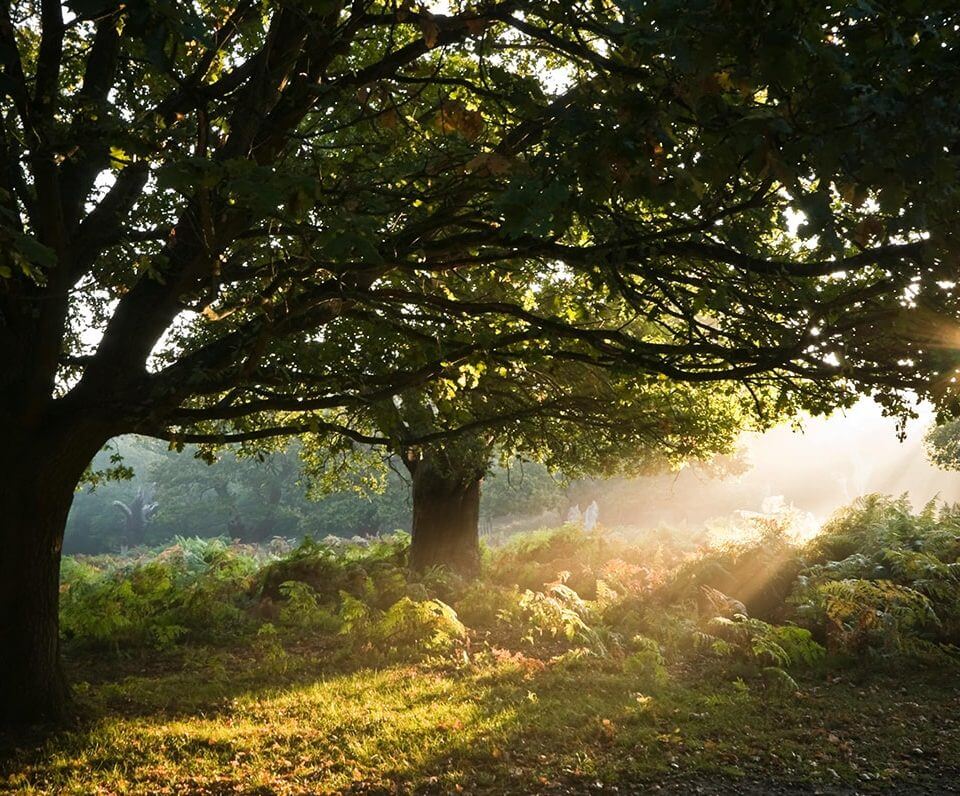
In the ancient forests of Europe, oak was a giant among trees. Animals sheltered beneath it, storms bowed to it, and people gathered around it for reasons they couldn’t quite explain. The Celts believed oak was a doorway to wisdom. The Greeks thought its leaves carried the voice of Zeus. To the Romans, it was a crown for heroes.
Oak didn’t ask for reverence. It simply stood — strong, patient, and unchanging — and people felt something in its presence that made them look up.
The Builders Arrive: Oak as the Backbone of Early Civilisation
As centuries passed, humans began to understand oak not just as a symbol, but as a partner. They discovered its strength, its resistance to rot, its ability to hold fast even in the harshest weather. Oak became the backbone of early civilisation.
It framed the great halls where kings feasted. It shaped barns that protected harvests through winter. It formed bridges that carried travellers across rivers. It built ships that crossed oceans and changed the course of history.
Every beam, every plank, every peg carried the memory of the forest it came from.
The Age of Craft: Medieval Oak Framing
By the medieval period, oak had become the material of mastery. Carpenters and framers devoted their lives to understanding it — reading its grain, anticipating its movement, shaping joints that would hold for hundreds of years.
Mortise and tenon. Curved braces. Hand‑cut pegs. Chamfers carved with pride.
Buildings rose that were more than structures; they were expressions of skill, patience, and respect. Many still stand today, their oak hardened by time, their frames as steady as the day they were raised.
Oak had become architecture’s storyteller.
Stewardship and Sustainability: A Material for Generations
As demand grew, people realised oak needed protection. Woodlands were managed with care. Trees were planted not for the present, but for the future — a future the planters knew they would never see.
Generations tended these forests. Generations harvested them responsibly. Generations passed down the knowledge of how to work with oak.
The tree became a symbol of continuity — a reminder that good things take time, and the best things take generations.
The Modern Renaissance: Tradition Meets Contemporary Design
In the modern world, where speed often replaces craft, oak found its way back into the spotlight. People began to crave authenticity again — materials that felt honest, buildings that felt rooted, craftsmanship that felt human.
Oak stepped forward, timeless as ever.
Today, it stands at the intersection of tradition and innovation. Glass walls meet oak posts. Steel brackets meet hand‑cut joints. Contemporary design meets ancient strength.
And oak adapts, just as it always has.
The Tree That Remembers: Oak’s Living Legacy
Oak remembers every season it has lived through. It remembers the hands that shaped it. It remembers the buildings it has held upright for centuries.
Its colour changes, its surface silvers, its grain deepens — but its story remains.
Oak is history you can touch. A legacy you can live inside. A material that carries the past into the future with quiet dignity.
The Story Continues: EAVOAK’s Place in the Timeline
The history of oak isn’t finished. Every new frame raised, every new building crafted, every new beam shaped becomes part of its ongoing tale.
And somewhere, in a woodland not far from here, a young oak is growing — slowly, patiently — preparing to become part of that story.